Combining Solar Panels with a LiFePO4 Power Station for Sustainable Home Energy
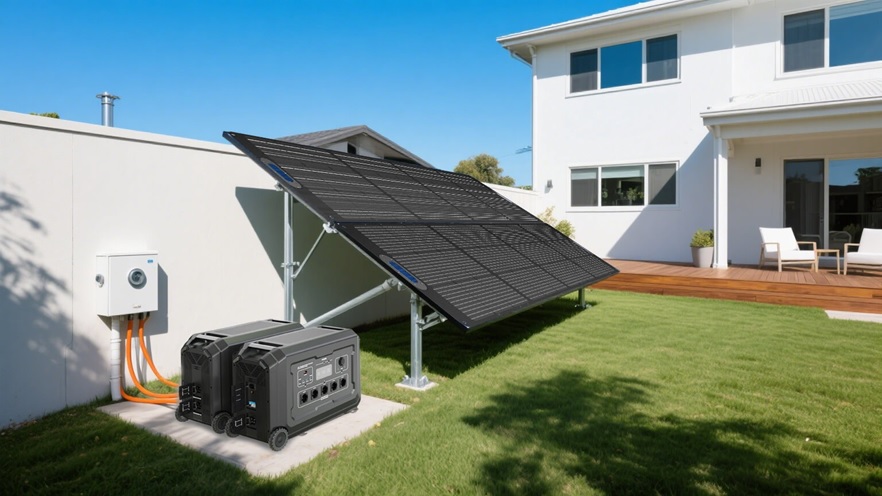
Homeowners can’t help it if they’re turning to energy production and storage these days, since prices are climbing, the mains grid is not a stable one, and demand for sustainable electricity is on the rise. If a solar panel battery combo appeals, then getting started is almost child’s play. A solar panel power bank system with LiFePO4 battery makes it possible to do without electricity bills and even supply light, a fridge and so on from the power stored up during the day, in case of a power outage.
All essential points about the combo, advantages of LiFePO4 batter for home use, and guidance on creating a system suited best according to one’s needs are discussed in this article.
Why Solar Panels and Battery Storage Belong Together
Solar panels only produce electricity when the sun is visible, which coincidentally is not typically when the weather is good. A major portion of the energy is solar electricity at midday, but most houses consume the highest energy at night after the sun has disappeared. Therefore, unused energy from solar panels has to be disposed of in some way, so it is returned to the grid. Nevertheless, you have a requirement for and need to pay for electricity at night. The use of a power station overcomes the issue by allowing you to store excess power generated by solar panels that would otherwise be thrown away and then utilizing it whenever it is necessary. It significantly increases your self-sufficiency by minimizing the amount of power you need to purchase from the grid and at the same time it can provide electricity during blackouts. Moreover, a power station is also appropriate for people who are renting, those living in flats, and basically anyone who doesn’t have the possibility to get solar panels permanently fitted since it’s a portable option.
What Makes LiFePO4 a Smart Choice
There is a reason why lithium iron phosphate chemistry is the most preferred option for residential storage.
- A long life span: A lot of LiFePO4 batteries have a cycle life rating of 3,000 to 6,000 which is significantly higher than the several thousand offered by other lithium technologies such as NMC. As such, daily use will allow you the benefit of having a battery that will last for several decades and the unit cost of kWh over time is therefore reduced.
- A battery is less dangerous if it cannot catch fire easily: Iron-phosphate chemistry, in fact, has better thermal stability and will not easily enter thermal runaway condition. Considering the presence of a rechargeable battery pack inside a house, this safety aspect has to be a high priority for a homeowner.
- Ability to deliver a constant power level: The flat discharge curve of LiFePO4 cell makes the battery give up a greater percentage of its nominal capacity. Hence, one is assured of getting a more or less uniform power flow from the battery without the phenomenon of sudden and drastic power drop of power level of other lithium batteries.
- Environmentally-friendly nature: Since these batteries don’t have cobalt, the highly controversial mineral, and also due to their prolonged life span, their usage will be enough to offset their environmental impact. Therefore, the eco-friendly-minded homeowner’s option is to go with these kinds of batteries.
Meet a Brand Focused on Home Energy Solutions
The portable and home energy storage market is developing fast, with brands offering more and more combinations. SOUOP Power is a new contender. A Shenzhen-based company, Kerui Power Storage, owns the SOUOP brand. The primary SOUOP offerings cover portable power stations, home backup power products, solar-powered generators, and various accompanying power solutions. Regardless of the brand you decide to go with, try to ensure that product description provides clear technical specifications, the battery system has a management system as a default feature (BMS), there is possibility for charging via solar panel, and that the service and support the company offers is of the quality to satisfy.
How the System Works
Solar-plus-power-station includes four main elements.
- Solar panels change sunlight into direct current (DC) electricity. Your selection depends on your purpose; you can, for instance, opt for foldable and portable solar panels which can only be used short-term or rooftop, balcony, or ground-mounted solar panels.
- The charge controller is part of the power station responsible for managing electricity flow from solar panels. In modern controllers, MPPT (Maximum Power Point Tracking) technology is applied which makes panels more productive.
- A lithium battery (LiFePO4) which receives its charge from solar panels, is a storage device. Capacity of the battery is measured in watt-hours (Wh).
- The device that converts DC into AC electricity is the inverter. It’s the inverter’s wattage which determines the power delivered to devices hooked up to the power station. Basically, if a higher wattage of the inverter will enable you to power bigger devices.
First, sunlight gets converted to electricity by solar panels. From there, the electricity enters a charge controller that sends the electricity into your battery. Afterward, the AC electricity produced by the inverter will supply your devices attached to the energy source you have at the power station. The majority of portable power stations can be connected to a wall socket or car light to charge. This function is handy during a series of overcast days when solar panels fail to gather sufficient energy.
Sizing Your System
Buying based just on price or advertised capacity, without figuring out what you actually need, is a big mistake. It’s actually pretty simple to work this out.
- First, make a list of all the devices you need to power. For each one, note down how many watts it uses and how long you’ll be using it. For example, a laptop might need 60 watts for a few hours. A fridge could use 100-200 watts on average throughout the day, though it runs a lot. LED lights only take a few watts. To get the total energy needed, multiply the watts by the hours for each device and add them all up to get watt-hours.
- Second, figure out the battery size. You’ll want a power station that can hold at least your total watt-hours. It’s a good idea to add an extra 20-30% to account for energy lost through the inverter and for the battery losing some capacity over time. If you plan to be without grid power for multiple days, you’ll need to plan for that longer period too.
- Third, choose an inverter with an output that’s higher than the total power your devices will draw at the same time. Some things, like fridges, kettles, or power tools, need a lot more power for a brief moment when they first start up. You need to check this “surge power” requirement for those items.
- Fourth, you need to figure out how much solar panel power you need to recharge the battery. Take your daily energy use in watt-hours and divide it by the number of hours you typically get good sunlight in your area. Add some extra for days that might be cloudy. For instance, if a family uses 1,500 watt-hours daily and gets 5 hours of good sun, they’d need about 300 watts of solar panels on paper, but in reality, something like 400-500 watts would be better.
Practical Tips for Getting the Most Out of Your Setup
Put the solar panel where it gets the most sun. Even a little bit of shade on one cell can cut the output in half, so make sure nothing is blocking it. Also, angle the panel correctly and keep it clean from dust and dirt.
- To make the power station last longer, don’t run it at full power all the time. It’s better to use electricity carefully and save extra power in old batteries or capacitors if you can. Using air conditioning and LED lights, along with fans and an inverter refrigerator, helps reduce the power draw.
- Temperature matters too. Lithium batteries work best when it’s warm but can’t be charged if it’s below freezing. Keep the power station in a dry, well-ventilated place and away from freezing temperatures. To help the battery last longer, don’t let it completely die. If you’re storing it, try to keep the charge above 50%.
Sustainability Benefits Beyond the Bill
Besides saving money on electricity bills, using your own solar panels means you’re using energy that doesn’t come from burning fossil fuels. Plus, because LiFePO4 batteries are built to last, you’ll need fewer of them over the years, meaning less manufacturing and waste. When the power goes out, a home power station also offers a quieter, cleaner alternative to loud, fume-spewing gas generators, since you won’t need to store any fuel. Having your own power source also makes you more resilient. With more frequent storms, heat waves, and power outages happening in many areas, a Solar Power Station for Home can provide reliable electricity for essential things like communication, medical equipment, keeping food cold, and lighting. This really gives you peace of mind.
Final Thoughts
.One of the easiest ways to get cleaner, more reliable home energy is to combine solar panels with a LiFePO4 power plant. The long cycle life keeps the cost reasonable over time, the technology is well-developed, and the setup is simple. Understand how much energy you use on a daily basis, choose a dependable product with strong safety features, and size the battery and panels sensibly. A well-selected system can provide clean, reliable power for years to come, regardless of your objectives, lower bills, emergency backup, or a first step toward energy independence.