How to Choose the Right Finish for Your Outdoor Entertaining Space
Know What You’re Choosing Before You Buy Anything
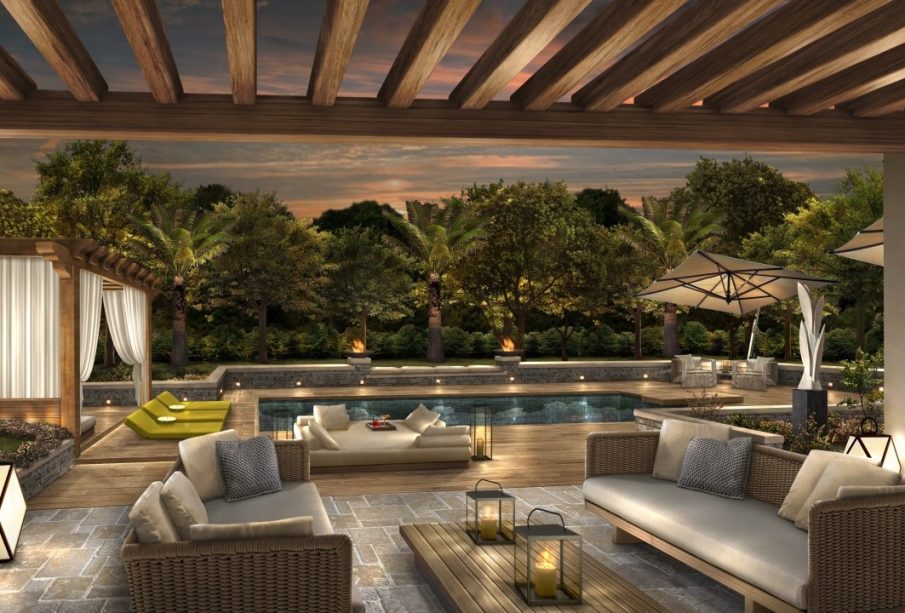
The type of finish you put on your deck, porch, or patio can really make the difference in how it looks and how you feel about it, season after season. Each type of finish, solid stain, paint, or un-tinted sealer or clear finish, has its own set of pros and cons, both for appearance and performance. A frequently-used rule of thumb is the stronger the protection, the more artificial the finish looks. But not all finishes are created equal.
Start With the Timber, Not the Product
Not all timbers are alike when it comes to taking a finish. How well the finish will fare over time largely depends on the type of timber you have and its current condition. New timber takes up more finish and does not let most of it ‘stick on’ until it has been weathered for several months or cleaned down to raw wood. High-density timber takes up little-to-no finish while soft, porous timber gobbles them up, leaving insufficiently cured finish to fail on the deck around a year later.
What you do to your deck today will decide how easy it’ll be to keep it in good condition tomorrow. Invest in a good bottle of finish and the time it takes to apply them evenly. Those with limited time, patience, or access to the deck in the week are well-advised to avoid semi-transparent finishes, it’s tough to not lap them on application which leads to shiny patches where you set the roller down.
Don’t Overlook the Safety Side of the Decision
Deck Restoration work frequently makes it clear how many owners applied coatings that may have looked good but turned their surface into an accident black spot. That’s especially noticeable in transition zones, where a step takes the garden up to the deck, or the entertainment area adjoins the pool.
With penetrating oils and quality stains, most lines will have specific anti-slip granules that are pre-tested safe to mix into their product (and where a little goes a very long way). That said, there are minimum-to-maximum levels of this material for it to function as intended. Getting the P-rating right for those specific zones is the conversation you and your supplier need to have up-front to ensure that it’s one less step you need to redo. A smooth finish on a staircase that guests use after dark, in wet weather, isn’t a minor oversight.
Film-Forming vs. Penetrating – This is the Decision That Affects Your Future
Film-forming finishes remain on the surface of the wood while penetrating finishes go into the wood. Both are fine to use, but they don’t change the same way, and they don’t rejuvenate the same way either.
As soon as a film-forming finish such as paint or solid stain wears out, it cracks and flakes off. Repairing it to get a solid base often requires you to sand off a lot of the finish layer. This costs time and money. With penetrating oils, when the finish begins to look too worn out or dull, you can usually apply simple wash and re-oil. There is no film to strip and therefore not necessary to strip the surface. In most homeowner situations, the lower maintenance cost of re-oiling a penetrating oil over five or ten years more than compensates for its slightly shorter life.
That said, areas in high-traffic zone near an outdoor kitchen or built-in BBQ may be justified in using the higher abrasion resistance of a harder film-forming product. It’s not a choice on the entire deck one way or the other, but different areas can indeed justify different choices.
The Micro-Climate of Your Space Matters More Than People Expect
A deck that is constantly in the sun, six to eight hours a day, requires a different kind of chemistry than a deck that’s beneath a pergola in a damp, shaded corner. For exposed decks, it’s all about pigment load. Pigmented finishes can last two to three times longer than clear finishes because the pigment reflects UV rather than letting it reach and break down the wood’s lignin (that’s a fact the timber coating research industry uses). Silvering and brittleness is the by-product of the UV degradation process and a high-pigment stain is acting as sunscreen for the wood.
For the shaded, wet areas, it’s not the sun that’s the enemy, it’s fungal growth and rot. You want a finish with a wide-open fungicide gun, and you want to put breathability at the top of your wish list. Non-breathable acrylic coatings do a great job sealing in the moisture that leads to internal rot. The key to keeping wood healthy is letting it breathe and release naturally occurring moisture.
Curing Time is Not the Same as Dry Time
No matter what product you use, don’t hurry to put the furniture back. Although most things will feel dry to the touch after a few hours, the curing process, in which the finish actually reaches its full hardness, takes days. Returning outdoor furniture too quickly, particularly something heavy like a chair or table, results in permanent indentations. Look at the curing time given on the product and stick to that, no matter how dry the surface seems.
The perfect finish for your outdoor space isn’t the most costly option or the one whose can looks the slickest. It’s the one you can muster the motivation to maintain.